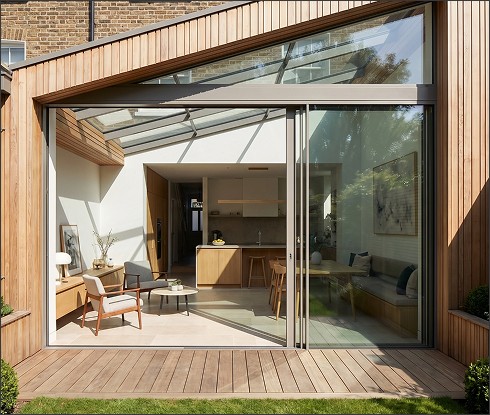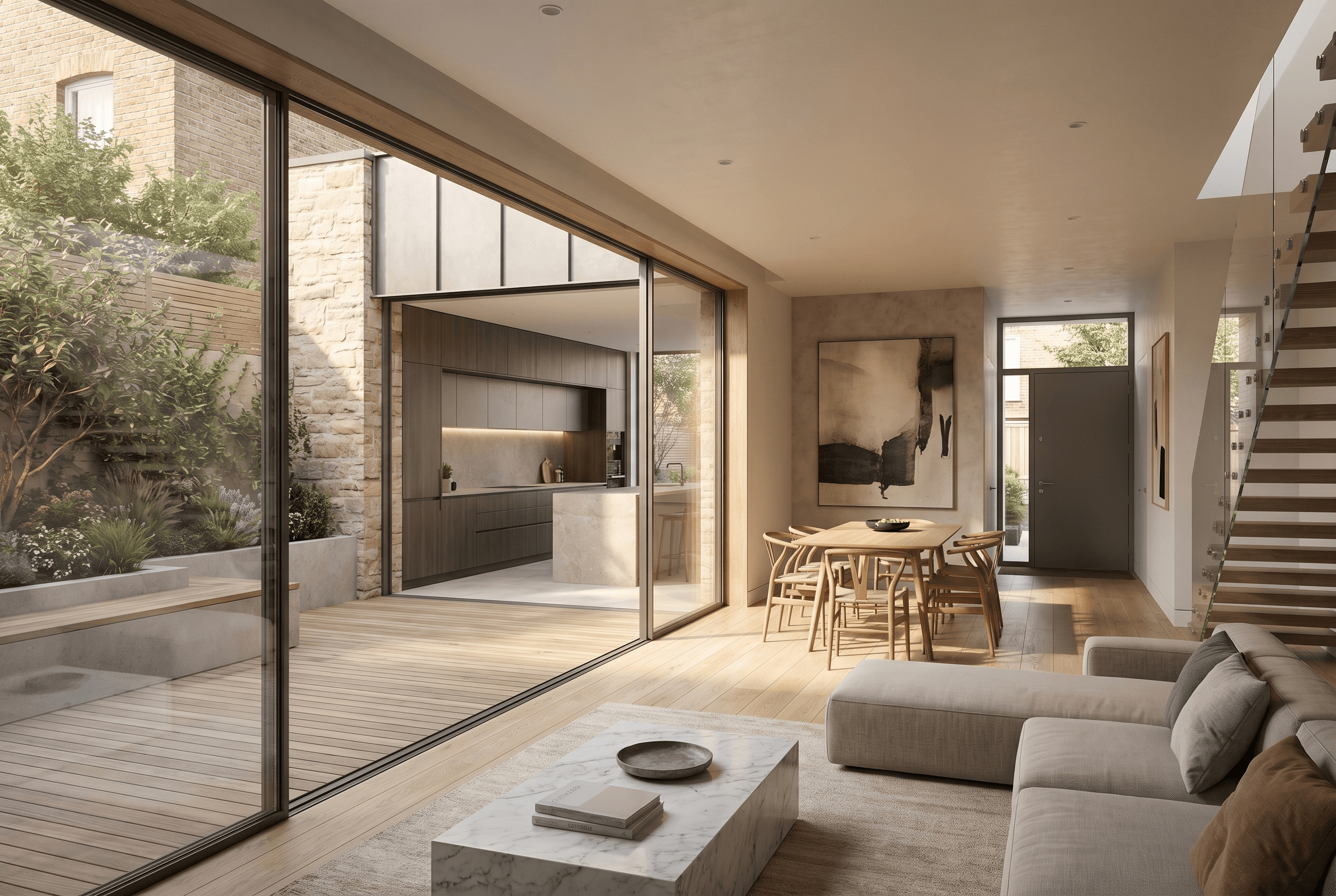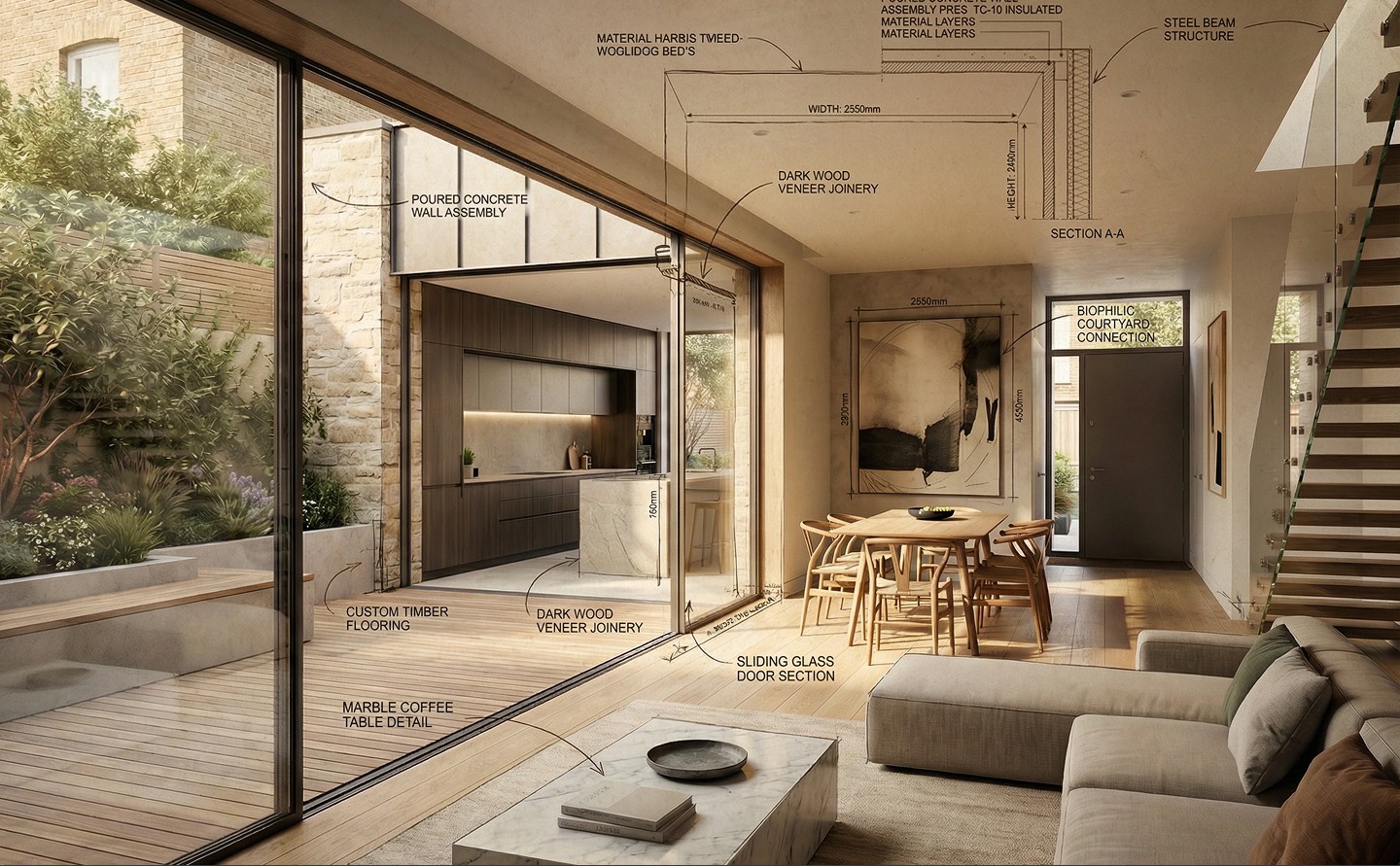
Early project planning in London for a major residential home transformation

Why the most expensive project mistakes start out cheap.

Why the most expensive project mistakes start out cheap.

Why the most expensive project mistakes start out cheap.

Why the most expensive project mistakes start out cheap.

MENU

MENU

MENU

MENU

<script>{

"@context": "https://schema.org",k

"@graph": [

{

"@type": "Organization",

"@id": "https://www.elemented.co.uk/#organization",

"name": "Elemented",

"url": "https://www.elemented.co.uk",

"logo": {

"@type": "ImageObject",

"url": "https://www.elemented.co.uk/logo.png"

}

},

{

"@type": "WebSite",

"@id": "https://www.elemented.co.uk/#website",

"url": "https://www.elemented.co.uk",

"name": "Elemented",

"publisher": {

"@id": "https://www.elemented.co.uk/#organization"

},

"inLanguage": "en-GB"

},

{

"@type": "WebPage",

"@id": "https://www.elemented.co.uk/journal/why-the-most-expensive-project-mistakes-start-out-cheap/#webpage",

"url": "https://www.elemented.co.uk/journal/why-the-most-expensive-project-mistakes-start-out-cheap",

"name": "Why the most expensive project mistakes start out cheap | Elemented",

"isPartOf": {

"@id": "https://www.elemented.co.uk/#website"

},

"about": {

"@id": "https://www.elemented.co.uk/#organization"

},

"description": "Many of the costliest project mistakes begin before work starts. Learn why early project planning in London matters and how better alignment protects quality, budget and delivery.",

"inLanguage": "en-GB"

},

{

"@type": "BlogPosting",

"@id": "https://www.elemented.co.uk/journal/why-the-most-expensive-project-mistakes-start-out-cheap/#article",

"mainEntityOfPage": {

"@id": "https://www.elemented.co.uk/journal/why-the-most-expensive-project-mistakes-start-out-cheap/#webpage"

},

"headline": "Why the most expensive project mistakes start out cheap",

"description": "Many of the costliest project mistakes begin before work starts. Learn why early project planning in London matters and how better alignment protects quality, budget and delivery.",

"articleSection": "Journal",

"keywords": [

"early project planning London",

"pre-construction planning London",

"home transformation planning London",

"project planning before building starts",

"budget planning for major residential projects"

],

"author": {

"@type": "Organization",

"@id": "https://www.elemented.co.uk/#organization",

"name": "Elemented"

},

"publisher": {

"@id": "https://www.elemented.co.uk/#organization"

},

"image": {

"@type": "ImageObject",

"url": "https://www.elemented.co.uk/images/journal/early-project-planning-london-elemented.jpg",

"caption": "Early project planning in London for a major residential home transformation"

},

"datePublished": "2026-04-08",

"dateModified": "2026-04-08",

"inLanguage": "en-GB",

"about": [

{

"@type": "Thing",

"name": "Early project planning"

},

{

"@type": "Thing",

"name": "Pre-construction planning"

},

{

"@type": "Thing",

"name": "Home transformation planning"

}

],

"mentions": [

{

"@type": "Service",

"name": "Clarity Pack",

"url": "https://www.elemented.co.uk/clarity-pack"

},

{

"@type": "Service",

"name": "Plan",

"url": "https://www.elemented.co.uk/plan"

}

]

},

{

"@type": "BreadcrumbList",

"@id": "https://www.elemented.co.uk/journal/why-the-most-expensive-project-mistakes-start-out-cheap/#breadcrumb",

"itemListElement": [

{

"@type": "ListItem",

"position": 1,

"name": "Home",

"item": "https://www.elemented.co.uk"

},

{

"@type": "ListItem",

"position": 2,

"name": "Journal",

"item": "https://www.elemented.co.uk/journal"

},

{

"@type": "ListItem",

"position": 3,

"name": "Why the most expensive project mistakes start out cheap",

"item": "https://www.elemented.co.uk/journal/why-the-most-expensive-project-mistakes-start-out-cheap"

}

]

}

]

}</script>

Why the most expensive project mistakes start out cheap.

For homeowners planning a serious residential project, early project planning in London often has more influence on quality, cost, and delivery than the work that happens later on site.

Most people assume the expensive part begins when construction starts. It doesn’t. In many cases, the real cost begins earlier, when the brief is still loose, the budget still feels theoretical, and early decisions are made without enough alignment between design ambition and delivery reality.

That is the stage where everything still feels flexible. Nothing has been built. Nothing has been ordered. No walls have come down. It is easy to believe that any decision made at this point is still harmless because it can always be adjusted later.

That is exactly what makes this stage so risky.

The most expensive project mistakes often start out looking small, easy, and cheap. A rough assumption about budget. A layout idea that has not been tested properly. A scope that sounds manageable until practical constraints begin to appear. An early figure that creates confidence without enough substance behind it. None of these things feel dramatic at first. But once the project starts moving, they become much harder to correct.

This is where many homeowners lose control of the process without realising it. Not because they made one catastrophic decision, but because too many early decisions were made before the right conversations had happened in the right order.

That is why the early stage matters so much.

Not because it is administrative. Not because it delays momentum. But because it protects the quality of every decision that follows.

On a serious residential project, clarity at the beginning is not a luxury. It is what gives the project a better chance of staying coherent, buildable, financially realistic, and well resolved all the way through.

For homeowners planning a serious residential project, early project planning in London often has more influence on quality, cost, and delivery than the work that happens later on site.

Most people assume the expensive part begins when construction starts. It doesn’t. In many cases, the real cost begins earlier, when the brief is still loose, the budget still feels theoretical, and early decisions are made without enough alignment between design ambition and delivery reality.

That is the stage where everything still feels flexible. Nothing has been built. Nothing has been ordered. No walls have come down. It is easy to believe that any decision made at this point is still harmless because it can always be adjusted later.

That is exactly what makes this stage so risky.

The most expensive project mistakes often start out looking small, easy, and cheap. A rough assumption about budget. A layout idea that has not been tested properly. A scope that sounds manageable until practical constraints begin to appear. An early figure that creates confidence without enough substance behind it. None of these things feel dramatic at first. But once the project starts moving, they become much harder to correct.

This is where many homeowners lose control of the process without realising it. Not because they made one catastrophic decision, but because too many early decisions were made before the right conversations had happened in the right order.

That is why the early stage matters so much.

Not because it is administrative. Not because it delays momentum. But because it protects the quality of every decision that follows.

On a serious residential project, clarity at the beginning is not a luxury. It is what gives the project a better chance of staying coherent, buildable, financially realistic, and well resolved all the way through.

Most problems do not begin on site.

When people think about project risk, they often picture visible problems. Structural surprises. Delays. Rising costs. Rework.

Contractors waiting for answers. Decisions being made under pressure. These are the moments that feel expensive because the cost is now visible.

But by the time those problems show up, the project has usually already been carrying them for a while.

They begin earlier, when the scope is not yet fully defined. When one part of the project has been thought through, but another part is still vague. When design ideas are progressing faster than budget logic.

When the practical realities of planning, sequencing, buildability, or property constraints have not yet caught up with the ambition of the brief.

At that stage, the project can still look healthy from the outside. The mood is often optimistic. Progress feels exciting. There is momentum. People are discussing possibilities. The problem is that possibility without structure can create false confidence.

A project can feel like it is moving well simply because decisions are being made. But movement is not the same as alignment.
If the brief is still loose, if the budget is still built on incomplete assumptions, or if the delivery implications of the design have not been thought through properly, then progress can become expensive very quickly.

This is one of the reasons so many projects feel smooth in the beginning and stressful later. The early stage often feels light because the consequences have not arrived yet. The stress appears later, when earlier assumptions harden into cost, compromise, and rework.

In London, where existing properties often come with tighter constraints, planning considerations, access challenges, party wall issues, and higher build costs, weak early assumptions can become expensive quickly.

When people think about project risk, they often picture visible problems. Structural surprises. Delays. Rising costs. Rework.

Contractors waiting for answers. Decisions being made under pressure. These are the moments that feel expensive because the cost is now visible.

But by the time those problems show up, the project has usually already been carrying them for a while.

They begin earlier, when the scope is not yet fully defined. When one part of the project has been thought through, but another part is still vague. When design ideas are progressing faster than budget logic.

When the practical realities of planning, sequencing, buildability, or property constraints have not yet caught up with the ambition of the brief.

At that stage, the project can still look healthy from the outside. The mood is often optimistic. Progress feels exciting. There is momentum. People are discussing possibilities. The problem is that possibility without structure can create false confidence.

A project can feel like it is moving well simply because decisions are being made. But movement is not the same as alignment.
If the brief is still loose, if the budget is still built on incomplete assumptions, or if the delivery implications of the design have not been thought through properly, then progress can become expensive very quickly.

This is one of the reasons so many projects feel smooth in the beginning and stressful later. The early stage often feels light because the consequences have not arrived yet. The stress appears later, when earlier assumptions harden into cost, compromise, and rework.

In London, where existing properties often come with tighter constraints, planning considerations, access challenges, party wall issues, and higher build costs, weak early assumptions can become expensive quickly.

Why early mistakes feel harmless.

The beginning of a project often feels forgiving.

Nothing physical has happened yet, so everything still appears adjustable. That creates a sense of comfort. People talk about layouts, ideas, finishes, wish lists, and costs in broad terms. There is room to imagine. There is room to refine. There is room to stay vague a little longer.

The problem is that vagueness has a way of attaching itself to everything else.

A loose scope affects budget expectations. A half-tested layout affects structural implications. An unclear priority list affects what gets protected and what gets cut later. A rough figure affects confidence. A weak early brief affects the quality of the design process that follows.

All of this can happen without anything looking obviously wrong.

That is what makes early mistakes so deceptive. They do not look like mistakes. They look like normal early-stage thinking. They look like reasonable assumptions. They look like harmless shortcuts. They look like momentum.

And because they do not feel expensive yet, they are rarely treated with the seriousness they deserve.

A homeowner might think, “We’ll figure that out later.” A designer might assume something can be resolved as the scheme develops. A contractor might provide an early view based on partial information. Each of these moments can seem entirely normal. But when too many of them stack up, the project begins carrying uncertainty in places where it should already be building clarity.

This is especially important on more considered residential projects. The larger the investment, the more leverage early decisions carry. A small misalignment at the start can travel through scope, cost, planning, timelines, and quality. What felt like a minor assumption in week one can become a major compromise later.

When assumptions start getting expensive.

There is a point in every project where an idea stops being loose and starts becoming real.

A layout becomes the basis of a design direction. A design direction begins influencing cost. Cost begins shaping expectation. Expectation starts affecting decisions. Then structure, services, planning, sequencing, procurement, and programme start tightening around those decisions.

That is the point where changing course becomes harder.

A wall that looked simple on a sketch may have bigger knock-on implications once structure is considered. An opening that felt obvious in principle may affect services, flow, or cost in ways that were not visible at first. An assumption about budget may no longer support the quality level the client had in mind. A brief that sounded coherent in conversation may reveal contradictions once the practical realities are tested.

At that stage, the project is no longer just discussing possibilities. It is starting to organise around them.

This is where early assumptions become expensive.

Not because anything has gone catastrophically wrong, but because the cost of correction is now higher. There may be redesign work. Re-pricing. Delays. Reprioritisation. Scope reduction. Friction between what the client wants and what the project can now comfortably support.

This is why the cheapest time to solve a project problem is often before it looks like a problem at all.

It is also why serious projects benefit from early alignment. The more that can be tested while decisions are still easy to shape, the less the project has to absorb later under pressure.

There is a point in every project where an idea stops being loose and starts becoming real.

A layout becomes the basis of a design direction. A design direction begins influencing cost. Cost begins shaping expectation. Expectation starts affecting decisions. Then structure, services, planning, sequencing, procurement, and programme start tightening around those decisions.

That is the point where changing course becomes harder.

A wall that looked simple on a sketch may have bigger knock-on implications once structure is considered. An opening that felt obvious in principle may affect services, flow, or cost in ways that were not visible at first. An assumption about budget may no longer support the quality level the client had in mind. A brief that sounded coherent in conversation may reveal contradictions once the practical realities are tested.

At that stage, the project is no longer just discussing possibilities. It is starting to organise around them.

This is where early assumptions become expensive.

Not because anything has gone catastrophically wrong, but because the cost of correction is now higher. There may be redesign work. Re-pricing. Delays. Reprioritisation. Scope reduction. Friction between what the client wants and what the project can now comfortably support.

This is why the cheapest time to solve a project problem is often before it looks like a problem at all.

It is also why serious projects benefit from early alignment. The more that can be tested while decisions are still easy to shape, the less the project has to absorb later under pressure.

Five early project planning mistakes that cost more later.
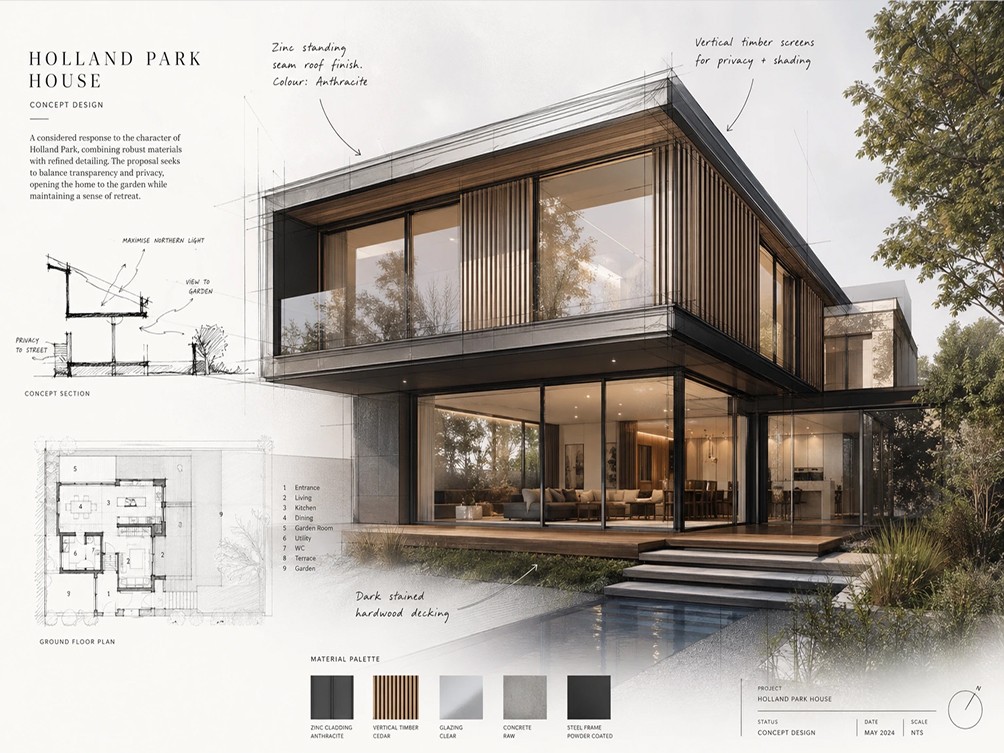
There are many ways a project can drift, but most of them tend to sit in a few recurring patterns.

1. Scope is broader than the budget can comfortably support.

This is one of the most common issues.

At the beginning, the brief often includes everything the client would ideally like to achieve. More openness. More light. Better flow. Additional space. Improved finishes. Better storage. Smarter details. Sometimes these things all make sense individually, but not yet collectively within the likely investment level.

Without proper early alignment, a project can begin developing around a scope that is simply too ambitious for the budget direction. That does not
always become obvious straight away. It often appears later, when pricing becomes more detailed and the project has to start negotiating with reality.

At that point, the project is no longer deciding what is best. It is deciding what to remove, reduce, or postpone.

That is a much weaker position to be in.

2. Design ambition has not been tested against delivery reality.

A good idea on paper still needs to work in practice.

This is where many projects get caught between aspiration and execution. The design may feel exciting, but has not yet been properly considered against buildability, sequencing, access, cost implications, or the realities of how the works would be carried out in that particular property.

That does not mean ambition should be reduced. It means ambition needs to be grounded.

When design and delivery are treated as separate conversations, the project often ends up correcting itself later. What looked elegant in principle may become awkward or expensive in execution. What felt straightforward may prove far more involved once the build is understood properly.

The best projects are not the ones with the biggest ideas. They are the ones where the ideas make sense all the way through.

3. Layout decisions create hidden knock-on costs.

Layout changes rarely exist in isolation.

A wall moved here can affect structure there. A bathroom relocated here can affect services there. A new opening here can influence circulation, cost, joinery, or even the logic of the whole floor.

Early layout decisions can feel innocent because they are often discussed visually before they are discussed technically. But layout is not just about what looks better. It is about how the home functions, how the spaces connect, and what those changes set in motion elsewhere.

This is one of the strongest reasons to think architecturally from the start. A layout is not a sketch to be tidied up later. It is the framework that many later decisions will depend on.

4. Planning or feasibility issues arrive later than expected.

Some project ideas feel viable until the property starts answering back.

That can mean planning limitations, structural constraints, access issues, site conditions, service implications, or the practical challenges of working within an existing home. None of these necessarily stop a good project, but they do shape what is realistic and what needs resolving.

If these factors are not considered early enough, the project can spend too long moving in a direction that was never as straightforward as it first appeared.

That creates wasted energy. It can also create disappointment, because the client has had time to become attached to a version of the project that was never fully grounded.

A better process does not wait for reality to interrupt the design. It invites reality in earlier.

5. Early costs create false confidence.

A rough cost can be useful in the right context, but it can also be dangerous.

Numbers have a powerful effect on confidence. Once a figure is spoken or written down, it begins to anchor expectations. The trouble is that early figures are often being attached to incomplete scope, untested assumptions, or design ideas that are still evolving.\

This is how false confidence enters a project.

The problem is not that early costs vary. Of course they do. The problem is when those figures begin shaping client expectations more strongly than the quality of the brief behind them.

Serious projects need more than numbers attached to unfinished thinking. They need budget direction informed by clearer project logic.

There are many ways a project can drift, but most of them tend to sit in a few recurring patterns.

1. Scope is broader than the budget can comfortably support.

This is one of the most common issues.

At the beginning, the brief often includes everything the client would ideally like to achieve. More openness. More light. Better flow. Additional space. Improved finishes. Better storage. Smarter details. Sometimes these things all make sense individually, but not yet collectively within the likely investment level.

Without proper early alignment, a project can begin developing around a scope that is simply too ambitious for the budget direction. That does not
always become obvious straight away. It often appears later, when pricing becomes more detailed and the project has to start negotiating with reality.

At that point, the project is no longer deciding what is best. It is deciding what to remove, reduce, or postpone.

That is a much weaker position to be in.

2. Design ambition has not been tested against delivery reality.

A good idea on paper still needs to work in practice.

This is where many projects get caught between aspiration and execution. The design may feel exciting, but has not yet been properly considered against buildability, sequencing, access, cost implications, or the realities of how the works would be carried out in that particular property.

That does not mean ambition should be reduced. It means ambition needs to be grounded.

When design and delivery are treated as separate conversations, the project often ends up correcting itself later. What looked elegant in principle may become awkward or expensive in execution. What felt straightforward may prove far more involved once the build is understood properly.

The best projects are not the ones with the biggest ideas. They are the ones where the ideas make sense all the way through.

3. Layout decisions create hidden knock-on costs.

Layout changes rarely exist in isolation.

A wall moved here can affect structure there. A bathroom relocated here can affect services there. A new opening here can influence circulation, cost, joinery, or even the logic of the whole floor.

Early layout decisions can feel innocent because they are often discussed visually before they are discussed technically. But layout is not just about what looks better. It is about how the home functions, how the spaces connect, and what those changes set in motion elsewhere.

This is one of the strongest reasons to think architecturally from the start. A layout is not a sketch to be tidied up later. It is the framework that many later decisions will depend on.

4. Planning or feasibility issues arrive later than expected.

Some project ideas feel viable until the property starts answering back.

That can mean planning limitations, structural constraints, access issues, site conditions, service implications, or the practical challenges of working within an existing home. None of these necessarily stop a good project, but they do shape what is realistic and what needs resolving.

If these factors are not considered early enough, the project can spend too long moving in a direction that was never as straightforward as it first appeared.

That creates wasted energy. It can also create disappointment, because the client has had time to become attached to a version of the project that was never fully grounded.

A better process does not wait for reality to interrupt the design. It invites reality in earlier.

5. Early costs create false confidence.

A rough cost can be useful in the right context, but it can also be dangerous.

Numbers have a powerful effect on confidence. Once a figure is spoken or written down, it begins to anchor expectations. The trouble is that early figures are often being attached to incomplete scope, untested assumptions, or design ideas that are still evolving.\

This is how false confidence enters a project.

The problem is not that early costs vary. Of course they do. The problem is when those figures begin shaping client expectations more strongly than the quality of the brief behind them.

Serious projects need more than numbers attached to unfinished thinking. They need budget direction informed by clearer project logic.

What better early project planning looks like.

A better early stage is not about overloading the client with information. It is about resolving the right questions in the right order.

What does the project actually need to achieve? Which priorities are fixed, and which are flexible? What is the likely investment direction if the brief stays at this level? Which parts of the home carry the most opportunity? Which constraints need to be respected? What needs testing before design develops further? Where are the likely pressure points? What should happen next, and in what sequence?

These are the questions that create project clarity.

Strong pre-construction planning in London is not about slowing a project down. It is about aligning design ambition, practical constraints, and budget direction before the project gains momentum.

A strong early process should bring design ambition and delivery logic into the same conversation. It should turn vague intent into something more structured. It should help the client understand not only what they want to do, but what the home, the budget, and the process are likely to support.

That does not remove creativity. It gives creativity a better framework.

It also changes the emotional tone of the project. Instead of moving forward with a loose mix of hope, assumptions, and early figures, the client begins with something more grounded. The project feels calmer.

Decisions feel more deliberate. The next step feels more credible.

That is what a serious start should do.

A better early stage is not about overloading the client with information. It is about resolving the right questions in the right order.

What does the project actually need to achieve? Which priorities are fixed, and which are flexible? What is the likely investment direction if the brief stays at this level? Which parts of the home carry the most opportunity? Which constraints need to be respected? What needs testing before design develops further? Where are the likely pressure points? What should happen next, and in what sequence?

These are the questions that create project clarity.

Strong pre-construction planning in London is not about slowing a project down. It is about aligning design ambition, practical constraints, and budget direction before the project gains momentum.

A strong early process should bring design ambition and delivery logic into the same conversation. It should turn vague intent into something more structured. It should help the client understand not only what they want to do, but what the home, the budget, and the process are likely to support.

That does not remove creativity. It gives creativity a better framework.

It also changes the emotional tone of the project. Instead of moving forward with a loose mix of hope, assumptions, and early figures, the client begins with something more grounded. The project feels calmer.

Decisions feel more deliberate. The next step feels more credible.

That is what a serious start should do.

Where the Clarity Pack fits.

This is exactly where the Clarity Pack becomes valuable.

It is not there to add paperwork. It is not there to slow momentum. It is there to improve the quality of momentum before the project gains too much speed in the wrong direction.

The Clarity Pack is where design ambition, project scope, property constraints, planning logic, budget direction, and delivery reality begin working together.

It is the stage where the project starts making sense.

Instead of moving from vague ideas straight into drawings or rough costs, the client gets a more structured understanding of what the project is trying to do, what needs resolving early, and what the most sensible route forward looks like.

For clients looking at home transformation planning in London, the Clarity Pack helps turn early ambition into a more structured, build-aware project brief.

That does not replace later design work. It strengthens it.

A better brief creates a better design process. A better design process creates better decisions. Better decisions create a better project.

And most importantly, it allows expensive mistakes to be addressed while they are still relatively cheap to change.

For clients planning a serious residential project, that is not a small benefit. It is one of the strongest protections the project can have.

You can explore the Clarity Pack (link to: page “Clarity Pack”) or see how it fits within Plan. (link to: page “Plan”).
Better decisions earlier.

The goal of a strong start is not perfection.

It is alignment.

It is making sure the project is thinking clearly before it starts committing heavily. It is making sure ambition, practicality, and investment direction are not drifting away from each other. It is making sure the brief is strong enough to support what comes next.

Most costly project mistakes do not announce themselves loudly at the beginning. They arrive quietly, disguised as assumptions, incomplete scope, and premature confidence.

That is why they deserve more attention, not less.

Because when they are discovered early, they are usually still manageable. When they are discovered late, they start affecting budget, quality, pace, and trust in the process.

A serious project deserves better than that.

If you are at the beginning of a serious residential project, better early project planning in London can protect far more than cost. It can protect the quality of the whole process.

If you are planning a major home transformation, extension, or reconfiguration, the best place to start is not with guesswork. It is with clarity.

A stronger brief.
A more grounded direction.
A better understanding of what the project needs before the costly part begins.

Not ready to talk yet?

If you are planning a serious residential project
and want to solve costly mistakes while they are still cheap,
start with clarity first.

All articles.


FAQs

FAQs

Q1: What kind of content will I find in the Journal?

Ideas, insights, and behind-the-scenes thinking about how we plan, shape, and deliver residential spaces. From practical tips to design principles that hold up over time.

Explore How We Work

Q2: Who is the Journal written for?

Homeowners who want to approach their renovation with structure and clarity. Whether you're planning your first project or refining your home, the content is designed to guide clear thinking.

Explore Plan

Q3: Do you cover design trends or styling advice?

No. We focus on flow, structure, and long-term decisions. The Journal is built around what makes homes live better, not just look good.

Explore Create

Q4: Can I suggest topics or ask questions?

Yes. Many of our articles start as questions from clients or readers. If there's something you'd like us to explore, send it our way.

Contact

Q5: What should I know before starting a home renovation in London?

Before renovating a home in London, consider planning requirements, realistic budgets, and how your space supports your lifestyle. A structured approach from the start will reduce stress and avoid costly delays.

Explore Your Home, Handled Playbook

spatial planning London homes | architectural layout planning | how to make a home feel bigger | light and flow in residential design | space planning for family homes London | how to make a house feel bigger without extending | how to improve flow in a London home | architect-led home planning London

The SEO Blueprint.

Residential spaces. Thoughtfully designed.

From London.

For people who expect more.

Residential spaces. Thoughtfully designed.

From London.

For people who expect more.